



search

Pinnacle 21®

Streamline external vendor data flow with Pinnacle 21 non-CRF data management software

Pinnacle 21 by Certara

Get cleaner non-CRF data faster with an external vendor clinical data platform

Pinnacle 21® Enterprise (P21E) revolutionizes third party data workflows in clinical trials by providing a centralized external vendor clinical data platform.

With non-CRF data now accounting for over 70% of clinical trial data, traditional manual methods of relying on spreadsheets and email chains are no longer efficient. P21E ensures high-quality, compliant data from external vendors through real-time validation, collaborative issue resolution, and a transparent audit trail.
Pinnacle 21 Clinical Data Exchange

400

Operational hours saved on average per year per study*

90

Less time and effort spent ingesting external vendor files*

50-75

Time savings on data transfer, spec review and issue management*

*Savings reported by a top 10 pharmaceutical company using P21E

Why use Pinnacle 21 Enterprise non-CRF data management software?

Pinnacle 21 Enterprise simplifies the complexities of managing non-CRF data by providing a centralized, collaborative external vendor clinical data platform for validation and issue resolution. This approach transforms external data management into an efficient, traceable process, with improved regulatory compliance.

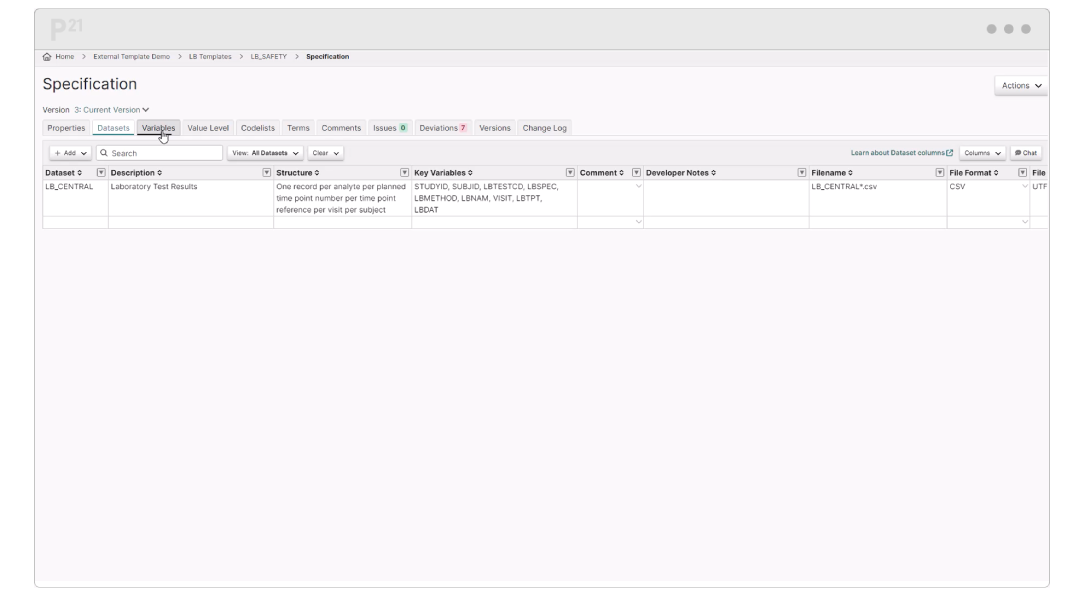
Create data transfer specs

The P21E platform lets you collaboratively create, manage and validate specifications in real-time. Relevant teams can easily review and edit specs in one central location – rather than wading through multiple spreadsheets and email chains.

Reuse standards

Standardize your specs in a central library with P21E. Having reusable standards for non-CRF data collection means significant time and resource efficiencies may be achieved.

Ensure compliance with real-time validation

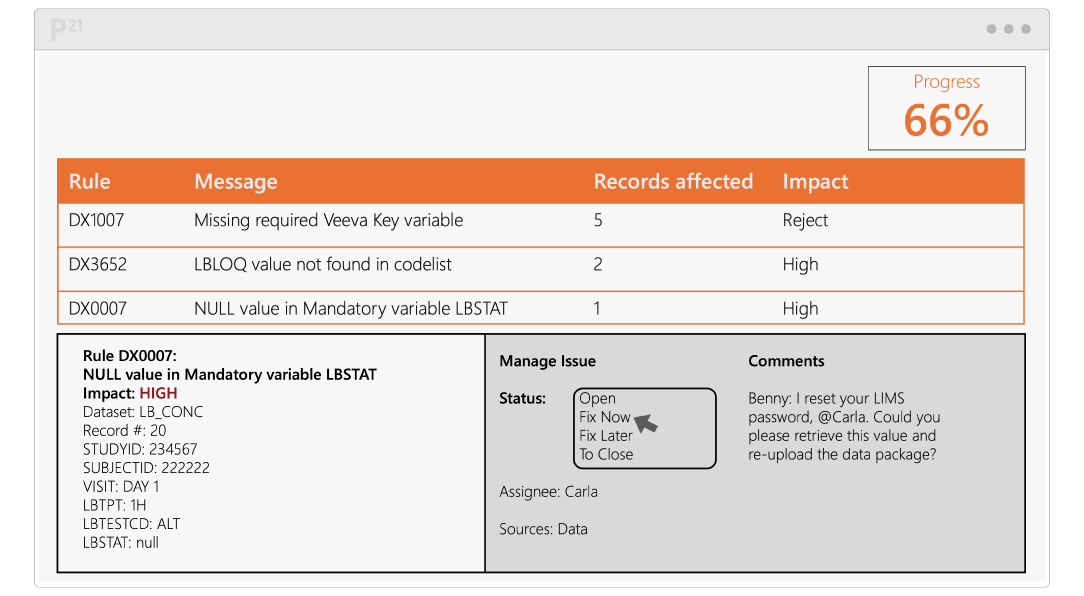
Vendor data is sent by secure file transfer with P21E, and deliverables are validated in-stream against your specs. This includes checks against structure, code lists and values. As a result, vendors have an actionable list of compliance issues to review in real-time.

Quickly resolve issues

Having a central platform for internal and external teams to manage data collaboratively dramatically reduces timelines. Vendors can instantly see and address non-EDC data issues, and all teams can easily collaborate to resolve issues much more efficiently.

Collaborate in one place

With P21E, you have one central location to receive, validate, review, edit, and manage vendor data. Multiple files types, including CSV, SAS datasets, and Excel files can be delivered, and access to relevant stakeholders can be managed centrally too.

Built-in dashboards

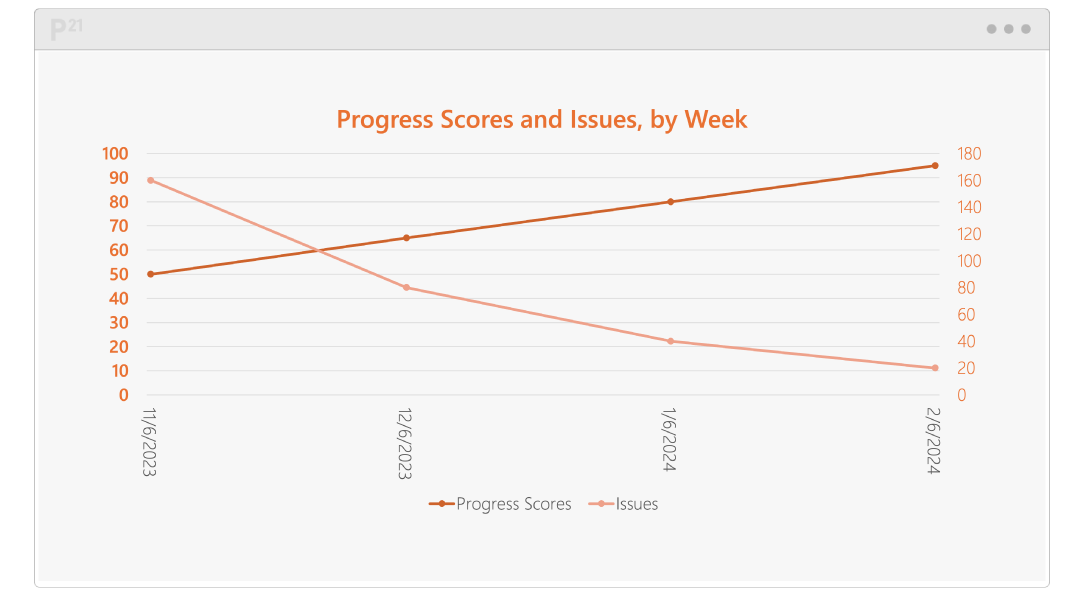
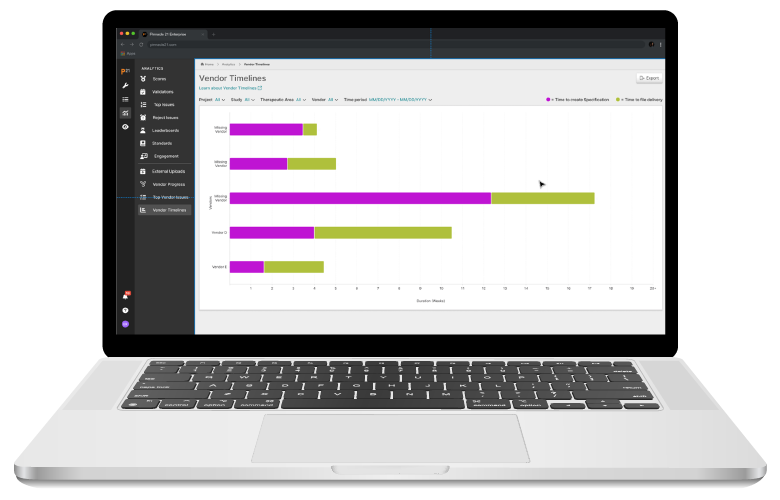
P21E provides a valuable source of metrics to aid decision making. Dashboards provide detailed analysis across therapeutic areas, projects, studies, and vendors. These dashboards streamline workflows and provide full visibility around vendor data quality and delivery timelines.

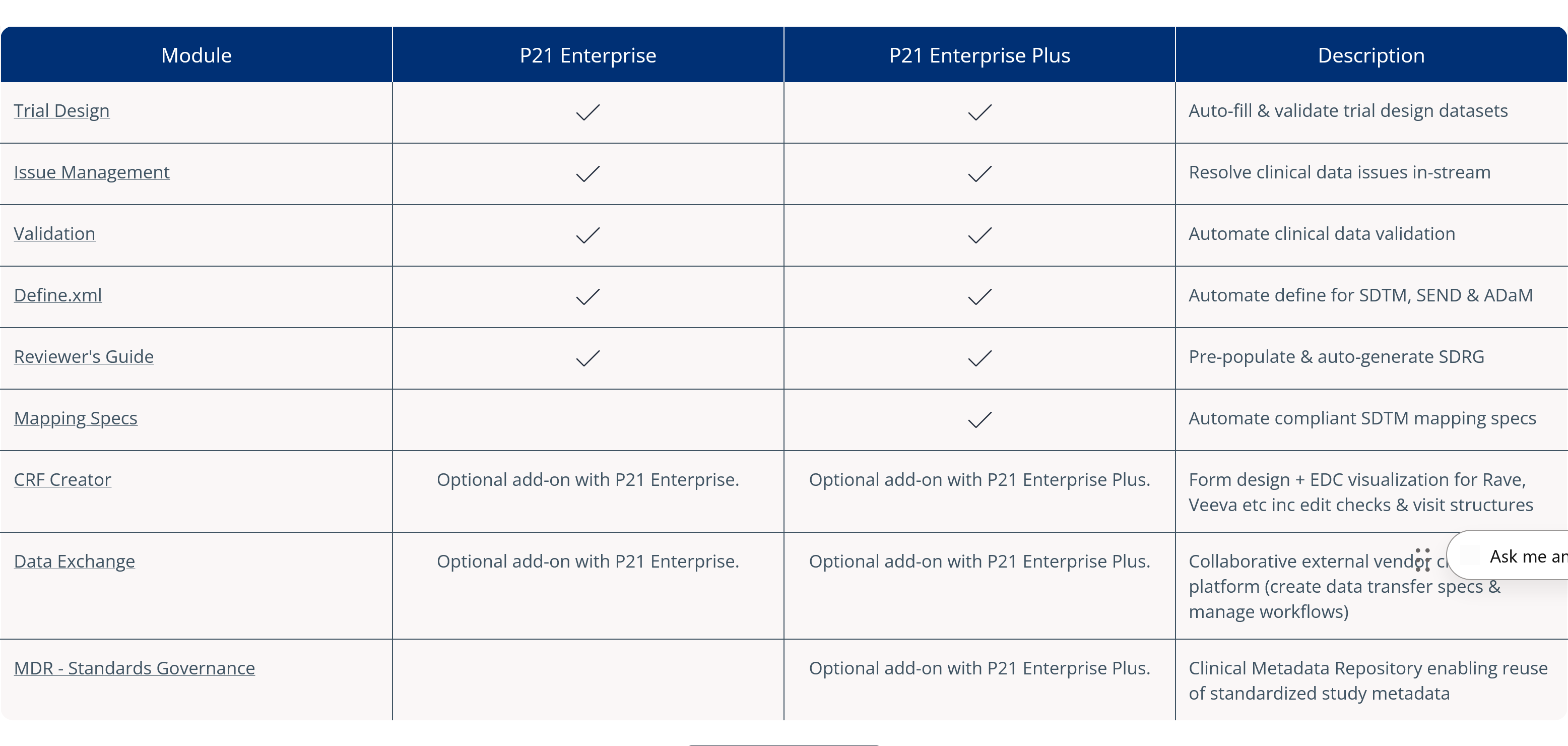
Pinnacle 21 Enterprise Software Suite

With Pinnacle 21 Enterprise as your foundation, add additional functionality according to your requirements. Get in touch to find out more about adding additional modules to your Enterprise platform. ​

Pinnacle 21 Enterprise Software Suite - solutions table

Why Certara

The Pinnacle 21 Enterprise platform ensures that your clinical trial data is fit to submit – as seen through the eyes of the regulators. It has enabled hundreds of pharma, biotech, CRO and regulatory organizations to optimize the end-to-end clinical trial process, from data collection to submission. The platform also serves as trusted non-CRF data management software for managing complex third party clinical trial data across studies and vendors.

Certara’s professional services and support teams have a deep-rooted knowledge of clinical data standards. It’s this long standing technical expertise that makes us the most reliable partner for handling your clinical trial conformance – and for helping to accelerate submission readiness.

Guide Managing Non-CRF Data

How to get cleaner, more compliant data faster from external labs and 3rd party vendors

With Pinnacle 21, your data is secure

Certara holds ISO 27001 certification for Certara’s Information Security Management System (ISMS). We have implemented robust security controls, undergone rigorous risk assessments, and continuously strive for improvement. Pinnacle 21 ensures full compliance with global data protection standards, offering peace of mind for sensitive analysis.

Learn more in our Trust Center

Book a free no-obligation demo

See how Pinnacle 21 Enterprise can transform your non-CRF data management process.

Why request a demo?

See how to reduce operational hours and timelines.
Learn how to achieve cleaner, compliant vendor data faster.
Explore the platform’s reporting and collaboration features.

Make an inquiry about Pinnacle products

Not ready for a demo?

Fill out this form to make an inquiry about the Pinnacle 21 product portfolio, or to discuss your requirements with our team, and we’ll get back to you right away.

FAQs

What is non-CRF data in clinical data management?

Non-CRF data refers to the collection of electronic data from external sources in clinical trials. This is data collected outside the EDC system (electronic data capture system) and it’s often referred to as non-CRF data, third-party vendor data, non-EDC data, and external data management.

What are the types of non-CRF data?

Examples of non-CRF data in clinical trials includes lab data, wearables data, medical images, and ePRO’s (electronic patient-reported outcomes). Non-CRF data is crucial in determining the safety and efficacy of new drugs being trialed. Many organizations now rely on non-CRF data management software to manage the rising volumes of diverse and complex datasets from external vendors.

What challenges do sponsors face when managing external vendor data in clinical trials?

Sponsors often struggle with fragmented workflows, inconsistent data formats, delayed issue resolution, and non-compliance when managing external vendor data. Manual, siloed processes, like email exchanges and spreadsheet tracking, can introduce errors, hinder visibility, and cause delays. Without centralized validation and collaboration, identifying discrepancies, reaching swift resolution, and ensuring compliance becomes time-consuming and resource heavy.

How to manage non-CRF data?

Non-CRF data can be reconciled manually, although it does pose certain challenges and risks related to human error. For example, there’s a greater chance of inaccuracies, inconsistencies, duplications and gaps being missed in manual checks. However, standardization of non-EDC data and robust data management using non-CRF data management software can resolve these challenges.

What is non-CRF data management software?

Non-CRF data management software is used to collect, standardize, validate, and manage external data from third party sources – such as lab results, imaging data, and wearable device outputs. Such platforms ensure consistency, quality, traceability, and regulatory compliance, while reducing manual work and reconciliation efforts.

Compliance is achieved by validating external data against mandatory requirements, such as CDISC standards, across the data lifecycle. Automated, in-stream validation checks help detect structural issues, incorrect values, and inconsistencies upstream, well before submission. Read this Best Practice Guide to Managing Non-CRF Data to master the essentials and address critical knowledge gaps in managing third party clinical data.

How does an external vendor clinical data platform improve clinical trial timelines?

External vendor clinical data platforms improve clinical trial timelines by facilitating real-time collaboration across internal and external stakeholders. This reduces the lengthy back-and-forth communication between sponsors and vendors when attempting to reconcile data (which is typically managed through complex email chains and disparate spreadsheets).

Such platforms also automate many manual elements of the data validation process, providing continuous validation across the data lifecycle. By identifying and resolving issues earlier (upstream), teams can avoid delays during reconciliation and submission preparation. This ultimately reduces the time to database lock and regulatory submission.