













search

May 22, 2026

Sponsors rely on CROs to manage data quality and regulatory readiness. But gaps in validation processes can introduce rework, delays, and compliance risks. While many CROs default to Pinnacle 21 Community, this approach often falls short in large scale and late phase studies. Requesting Pinnacle 21 Enterprise ensures better oversight, collaboration, and submission readiness from study setup.

In this blog we explore how your CROโ€™s choice of validation platform can directly impact your studyโ€™s success. Specifically, we consider:

  • Where Pinnacle 21 Community creates risks in CRO-led workflows
  • When and why sponsors should require CROs to adopt Enterprise
    • Where Enterprise adds significant value
    • How Enterprise makes a difference

When Pinnacle 21 Community stops being enough

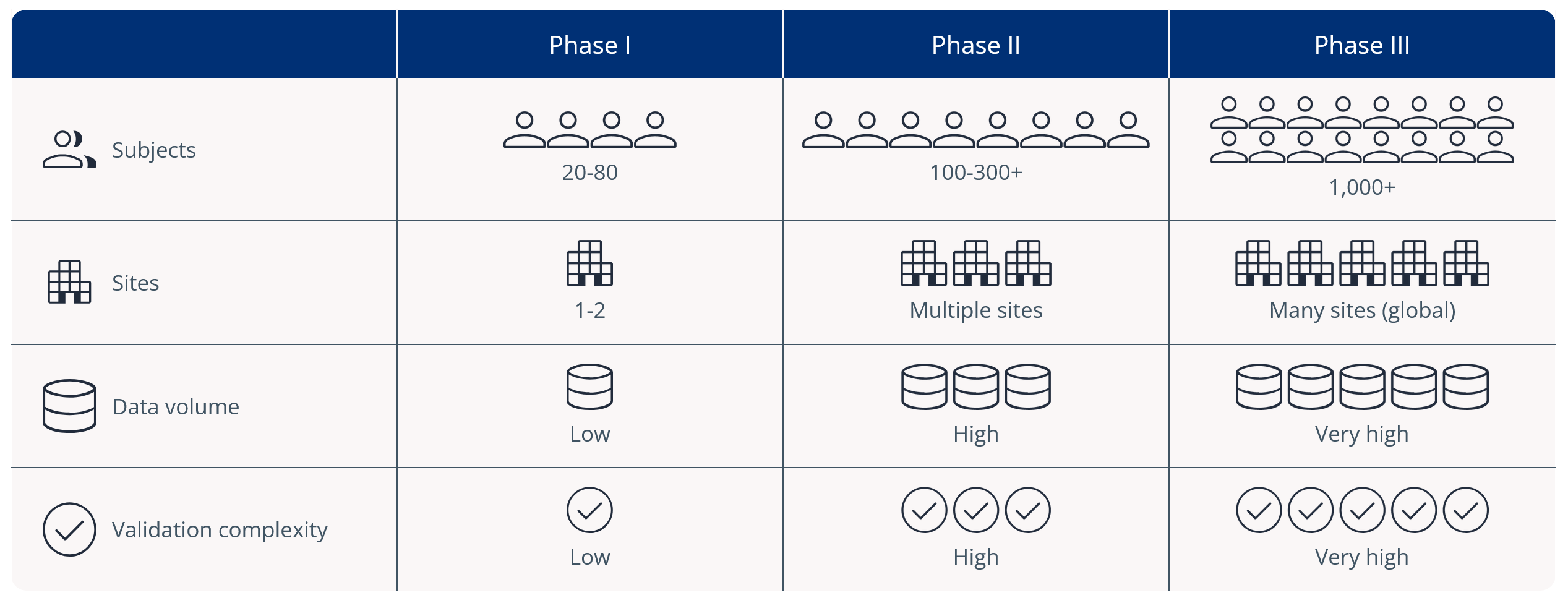
Pinnacle 21 Community is an established solution for basic validation requirements, particularly for small clinical studies. But as studies move from early phase to later stage development, validation complexity rapidly increases. This is particularly seen in the increased number of datasets and cross-domain dependencies.

What works for Phase 1 studies quickly becomes difficult to manage across Phase 2 and beyond, where validation becomes a continuous, multi-stakeholder process – rather than a one-time activity.

When CROs rely solely on Community, sponsors risk:

Unreliable validations

Without a centralized validation standard, variability in how and when CROs apply validation rules can leave sponsors exposed to discrepancies between submitted data and regulatory expectations. This risk is compounded since Community is not guaranteed to be aligned with the latest validation engine updates. As a result, teams may validate against different rule versions, creating further inconsistencies.

Delayed issue resolution

Without centralized, real-time issue management, CROs are left to manage hundreds or thousands of findings in spreadsheets across multiple reruns. This makes it extremely difficult to track, assign, and resolve issues promptly. Such inefficiencies often lead to prolonged data discrepancies, which impacts timelines.

Delays in submission readiness

Manual creation of submission deliverables risks errors in define.xml packages. This increases rework and impacts sponsor timelines. Manual generation of Study Data Reviewerโ€™s Guides further compounds the risk of inconsistencies and delays. The absence of insight into submission readiness โ€“ and the required steps to achieve this โ€“ also jeopardizes successful sponsor submissions.

Lack of oversight & control

Sponsors rely on static validation outputs, which means no visibility into what was run, when, and by who. The absence of a collaborative platform also limits visibility into resolution progress and submission readiness. With no centralized audit trail of validation and issue lifecycles, sponsors lack the visibility needed to effectively manage and control CRO partnerships.

Why Community workflows break down at scale

As study size and complexity increase, validation expands from a single task into a fully managed process. Community-based workflows stop being fit-for-purpose due to structural limitations.

These gaps mean that CROs using Community are not best placed to deliver timely, compliant submissions.

Where Community workflows create risk

Validation Run

No standardized validation processes

Spreadsheet Output

No live issue tracking across validation runs

No single source of truth

Email Exchanges

No centralized collaboration

Version control issues

Manual Metadata Work

Disconnected metadata processes

Increased manual rework

Validation Reruns

No auditability or traceability

Lost issue context across runs

Submission Package

Increased compliance and submission risk

How Pinnacle 21 Enterprise closes the gaps left by Community

Pinnacle 21 Enterprise is purpose-built to mitigate sponsor risk by providing a collaborative environment that strengthens validation assurance. When sponsors ask CROs to use Enterprise, they gain:

Centralized validation and issue management

Enterprise provides a central platform where validation and issue activities are automatically captured, tracked, and managed across sponsors and CROs. This creates a single source of truth for real-time collaboration across stakeholders. And with both ‘fix tips’ and pre-written explanations, sponsors benefit from swifter issue resolution.

  • Standardized validation processes across studies
  • Full history across the validation lifecycle
  • Built-in issue tracking and resolution with full audit trails
  • Reusable โ€˜fix tipsโ€™ with pre-written explanations

Sponsors have real-time visibility into data quality and issue resolution. Risks can be identified earlier and issues resolved faster, keeping studies on track.
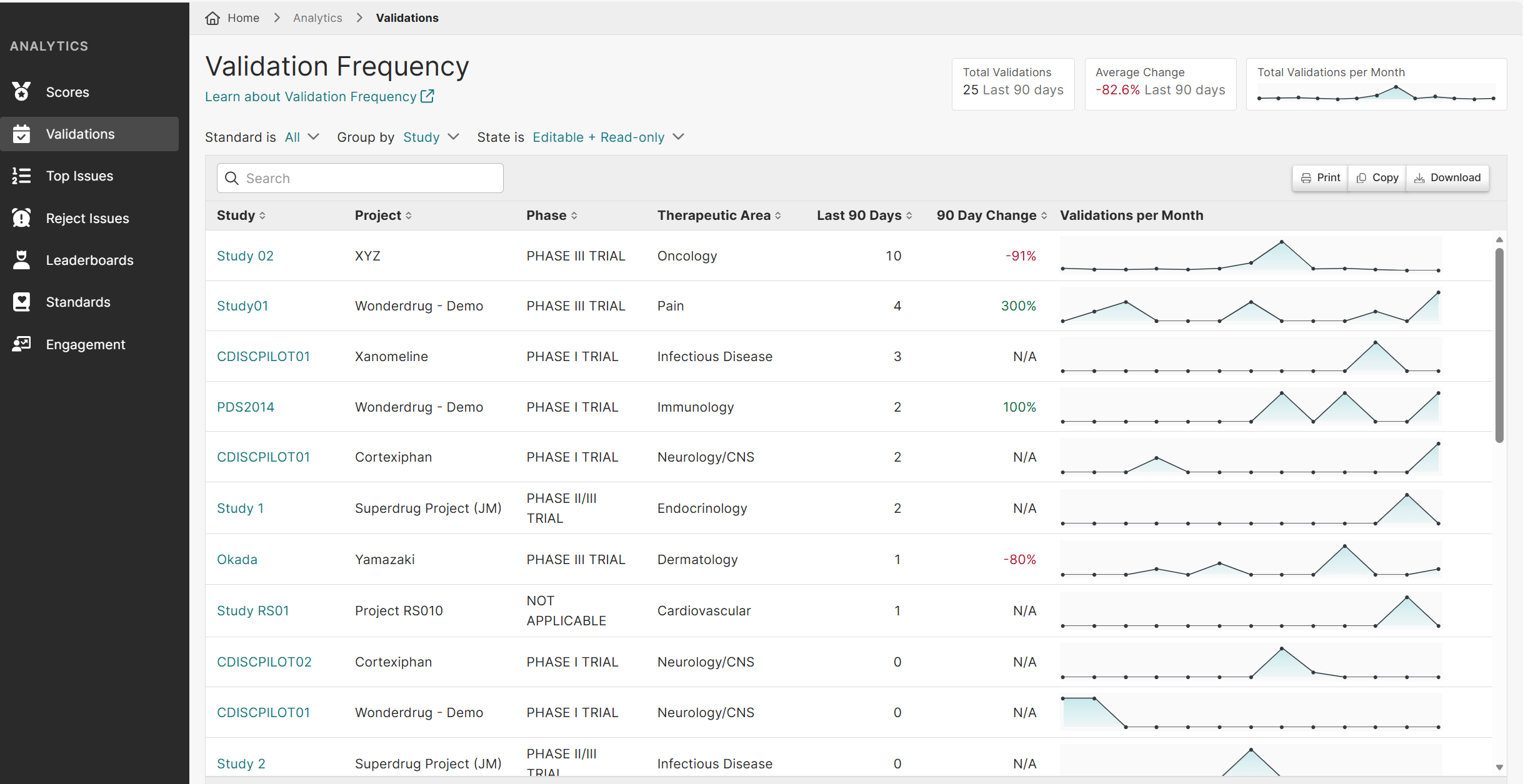

validation dashboard in Pinnacle 21 Enterprise

Increased regulatory compliance & submission-readiness

Pinnacle 21 Enterprise is maintained in line with the very latest version of the validation engine. This gives sponsors confidence that validation is consistently aligned with current regulatory expectations, reducing the risk of discrepancies and rework delays.

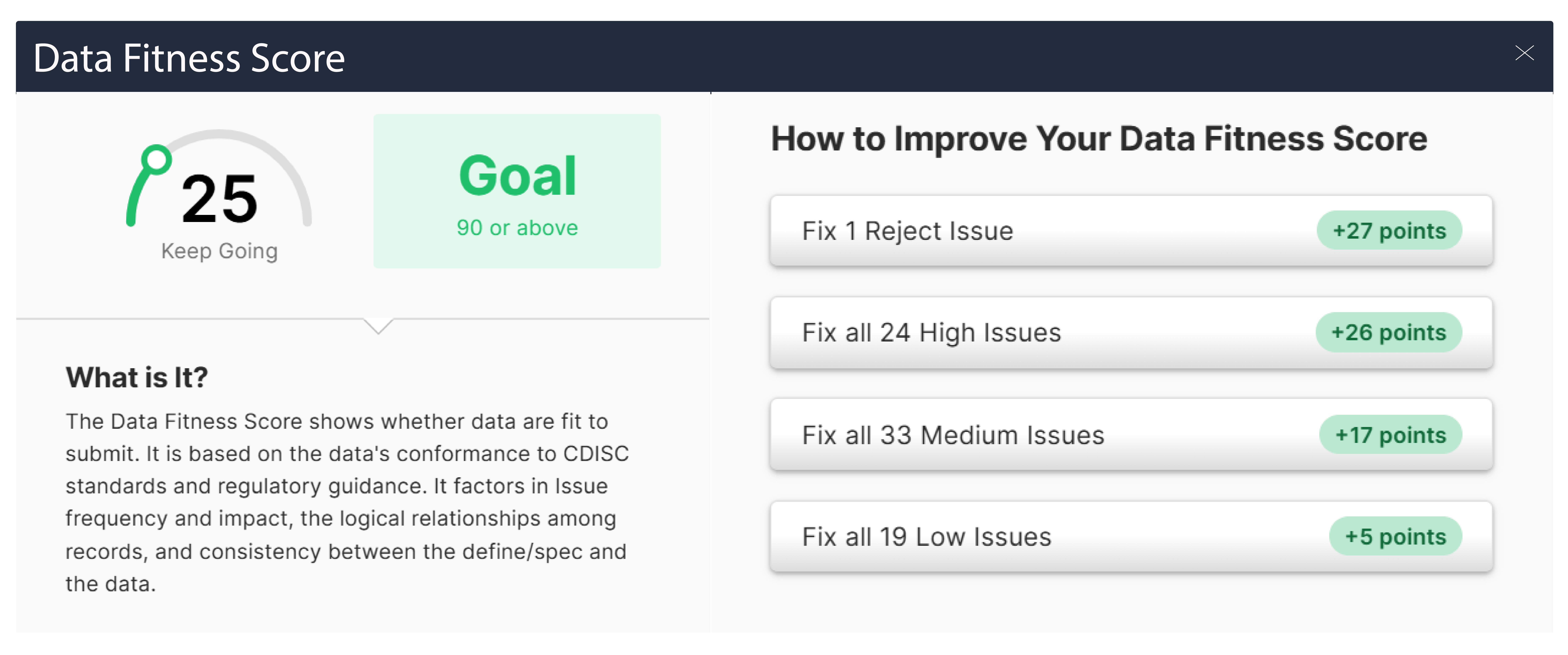
โ€˜Data fitnessโ€™ scores in Enterprise provide a real-time, ongoing measure of how close a study is to submission readiness. This gives sponsors the visibility needed to track progress and intervene earlier where needed. Data package specific guidance leads CROs towards improved compliance scores and regulatory readiness.

  • Prompt alignment with the latest version of the validation engine
  • Alignment with the latest validation rules across global agencies (including FDA and PMDA)
  • Consistent application of CDISC standards and Controlled Terminology
  • Quantitative measure of submission readiness with guided resolution steps

Sponsors benefit from reduced regulatory risk and a faster path towards submission readiness.
Improved data consistency

Pinnacle 21 Enterprise helps ensure submission packages are accurate, consistent, and aligned with regulatory expectations from the outset – while maintaining that consistency across the full study lifecycle.

  • Automated generation of regulatory-aligned Reviewerโ€™s Guides
  • Up to 80% auto-population of compliant define.xml packages
  • Consistent application of standards, rules, and metadata across all studies and partners
  • Continuous issue tracking across validation runs and reruns
  • Standardized issue explanations for consistent Reviewerโ€™s Guides

With consistent, high-quality deliverables, sponsors can be confident that risks are mitigated, and submissions are aligned with regulatory expectations.

Greater CRO validation oversight

Centralized collaboration and portfolio-level visibility in Enterprise provide a single source of truth, allowing sponsors to proactively monitor progress, enforce accountability, and address issues before they impact timelines or submissions.

  • Shared access to validation results and issue status
  • Portfolio-level dashboards across studies:
    • Metrics for data quality, progress, and submission readiness
  • Early identification of recurring issues and risk trends
  • Full audit trail for complete traceability and inspection readiness

Sponsors gain real-time control and accountability across CRO partners – reducing risk, and ensuring studies stay on track for timely submission.

How Pinnacle 21 Enterprise compares to Community

Read this blog for a full comparison of Pinnacle 21 Enterprise functionality compared to Community: https://www.certara.com/blog/how-does-pinnacle-21-enterprise-differ-from-the-community-version/

Where sponsors most benefit from Enterprise

Sponsors gain greater CRO validation oversight and submission readiness when partners use Pinnacle 21 Enterprise for:

Multiple studies or large, complex datasets
Preparing regulatory submissions
Phase II and Phase III studies

This value becomes even more apparent when sponsors manage multiple CRO partners.

On average, organizations using Enterprise report up to 80% time savings across validation, issue management, and submission deliverable generation. For sponsors, this translates into reduced risk and greater confidence that submission milestones will be met.

Summary and next steps

As clinical trials become more complex, relying on Community alone introduces unnecessary risk. Asking your CRO to use Pinnacle 21 Enterprise is a strategic decision to improve data quality, accelerate timelines, and reduce regulatory risk. By enabling transparency, collaboration, and scalability, Enterprise helps ensure your study is submission-ready from day one.

Improve CRO validation oversight & submission readiness

Learn how Pinnacle 21 Enterprise equips your CRO to deliver greater visibility and stronger validation assurance – so you can have confidence that submission deliverables will be accurate, compliant, and on time.


How to de-risk submissions with Pinnacle 21 Enterprise Make an inquiry
Pinnacle 21 by Certara

Author

Jen Manzi

Jen Manzi

Subject Matter Expert and User Advocate, Pinnacle 21 by Certara

Jen Manzi is a Subject Matter Expert and User Advocate at Pinnacle 21. She has over 20 years of Pharma/Life Sciences industry experience in Clinical Trials and Safety Data Management. Jen has held various roles within these areas, including eCRF Programmer, SDTM Delivery Lead, Product Owner and Programmer of Batch Processes, Vendor Relationship Manager, Program and Process Improvement Manager, and Validation Lead.

Make an inquiry about Pinnacle 21 Enterprise

Pinnacle 21 Enterprise builds on Communityโ€™s core validation capabilities with:

Advanced validation capabilities & alignment with latest validation engines
Enterprise-level governance
Issue tracking, prioritization and submission readiness guidance
Centralized collaboration and oversight

Make an inquiry to learn how your organization can benefit from reduced risk, increased quality, and guided submission readiness with Pinnacle 21 Enterprise.


FAQs

What is CRO validation oversight and why does it matter for regulatory submissions?

Effective CRO validation oversight ensures sponsors maintain visibility and control over how clinical data is validated, tracked, and prepared for submission. Without centralized oversight, inconsistencies in validation rules, issue resolution, and audit trails can create compliance risks and submission delays.

Why should sponsors require CROs to use Pinnacle 21 Enterprise instead of Community?

Pinnacle 21 Community is suitable for smaller or early-phase studies, but it lacks centralized collaboration, integrated issue management, and auditability. Pinnacle 21 Enterprise provides standardized validation workflows, real-time dashboards, and submission readiness tracking across sponsors and CROs. See the differences between Pinnacle 21 Enterprise vs Community in this comparison table: https://www.certara.com/fact-sheet/pinnacle-21-enterprise-dataset-validation-submission-readiness/

How does Pinnacle 21 Enterprise improve submission readiness?

Pinnacle 21 Enterprise functions as submission readiness software by continuously measuring data quality and compliance throughout a study. Features like automated define.xml generation, Reviewerโ€™s Guide support, validation lifecycle tracking, and โ€˜data fitnessโ€™ scoring help teams identify risks earlier and prepare cleaner submission packages faster. This reduces delays and improves confidence before regulatory submission.

What are the biggest risks of using Pinnacle 21 Community in large clinical studies?

In large or late-phase studies, Pinnacle 21 Community workflows often become difficult to scale. Common challenges include manual issue tracking, inconsistent rule application, lack of audit trails, and fragmented collaboration between sponsors and CROs. These limitations can slow issue resolution, reduce visibility into submission readiness, and increase regulatory risk across complex studies. Watch the webinar to help decide which version of Pinnacle 21 is right for your study: https://www.certara.com/webinar/pinnacle-21-community-or-enterprise-how-to-decide-which-is-right-for-your-study/

What should sponsors look for in submission readiness software for CRO partnerships?

Sponsors evaluating submission readiness software should prioritize centralized validation management, audit trails, standardized rule enforcement, integrated issue tracking, and real-time visibility across studies. Platforms like Pinnacle 21 Enterprise help align CRO workflows with current regulatory expectations while improving collaboration, traceability, and submission consistency across global programs.