




search

May 8, 2026

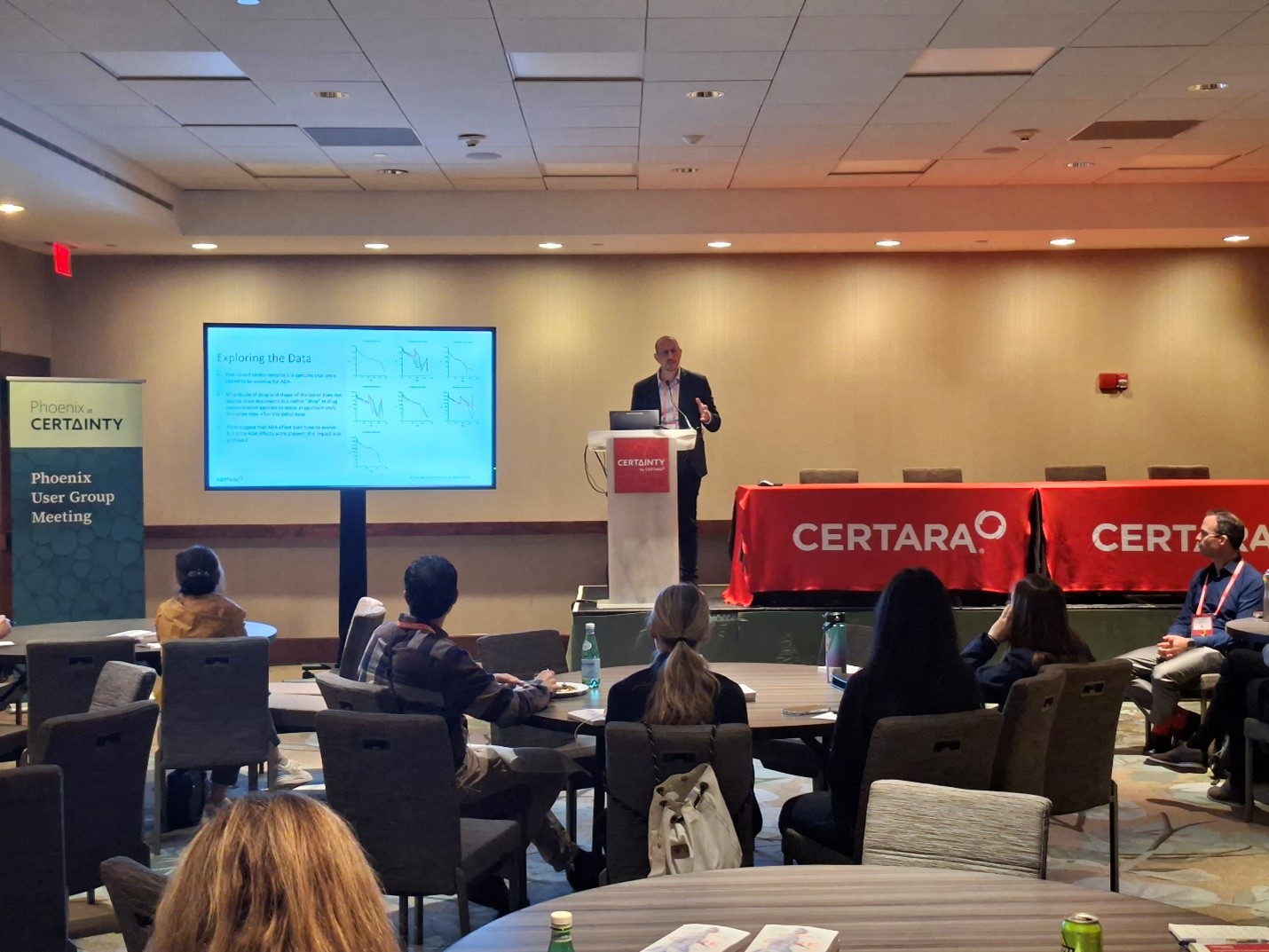
At Certainty 2026, the Phoenix User Group Meeting brought together scientists, Phoenix users and the Phoenix experts to explore one central question: how can we move from analysis to insight faster, without compromising scientific rigor?

The answer, echoed across sessions throughout the day, was clear: the future of pharmacometrics lies in intelligent automation, integrated workflows, and AI enabled solutions.

A Platform Vision for the Next Era of PK/PD

The day opened with a forward-looking perspective on the evolution of pharmacometrics. As drug development becomes more complex and data intensive, organizations are under increasing pressure to reduce timelines while maintaining quality and compliance.

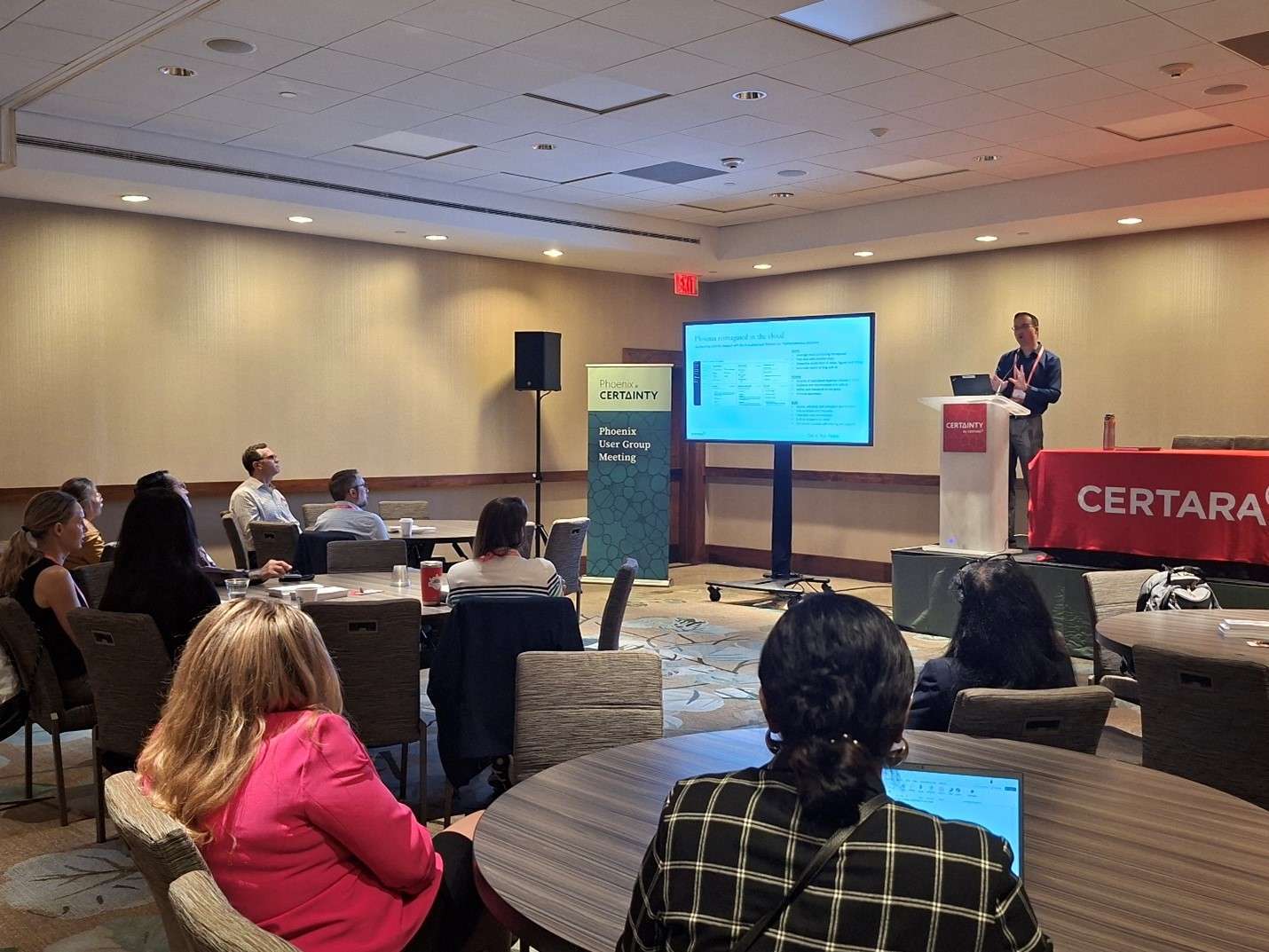
Fred Mahakian, Product Leader for the Phoenix portfolio, described the technology required for this next era. PK/PD scientists need a single environment for data preparation, analysis, reporting, and collaboration into a single, connected environment. That’s why Fred and his team have devoted so much of the last year to building and enhancing Phoenix Cloud.

In the sessions that followed, Todd Silvius, Arjen Bos and Michael Clifton from the Phoenix product team shared new and upcoming capabilities across the ecosystem, including TFL Studio, AI PK Reports, and PK Submit.

At the demo bar outside the session room, attendees had the opportunity to experience these tools in action and explore how they help turn analysis into answers faster, standardize workflows without limiting flexibility, and enable teams to scale without increasing effort.

Impact of AI in PK/PD workflows

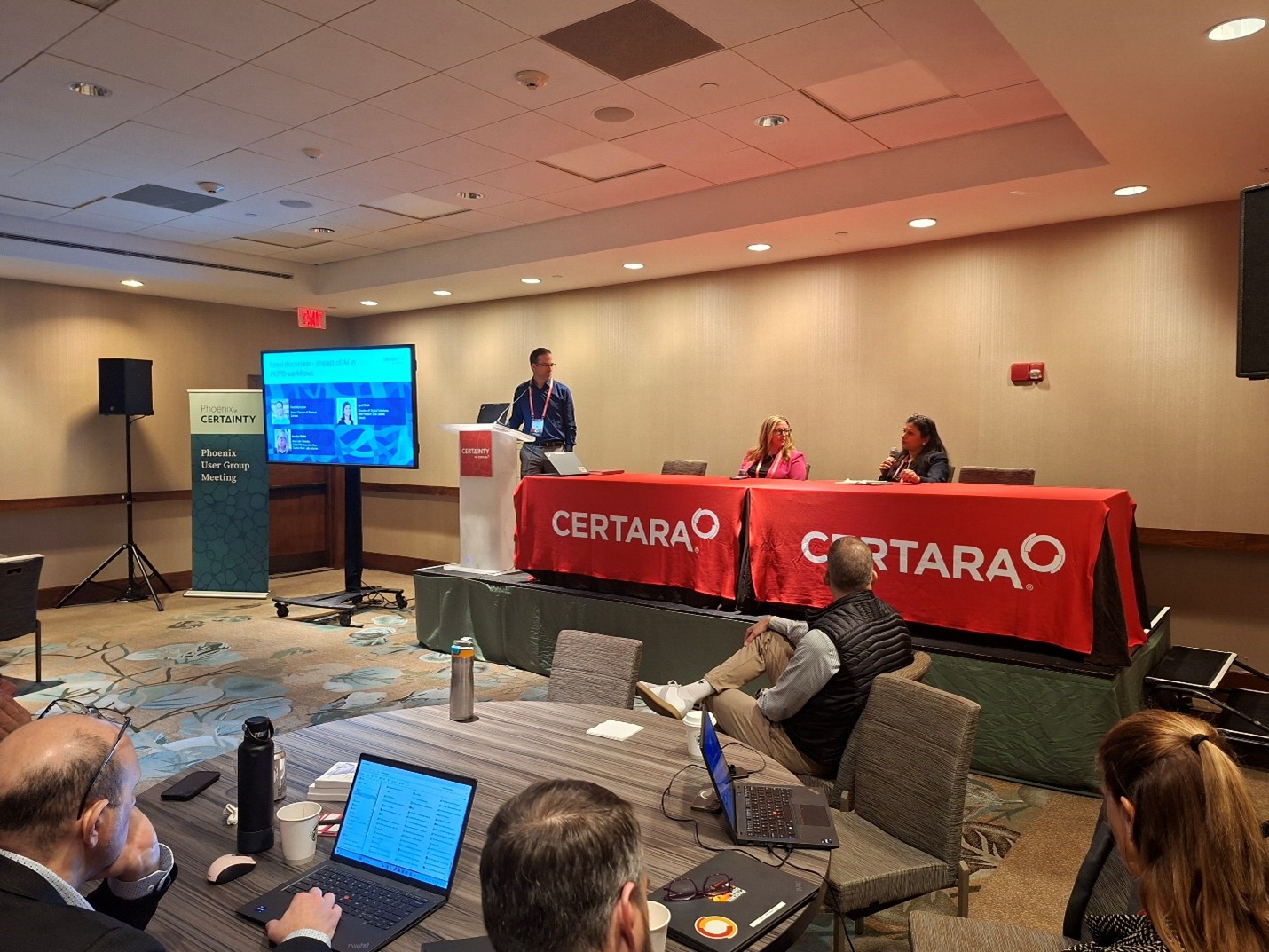
No conference in 2026 would be complete without addressing AI, and the Phoenix UGM was no exception. We were pleased to welcome Jyoti Shah (Director of Digital Solutions and Product Line Leader, Merck) and Jocelyn Webb (Associate Director, Global Pharmacokinetics, Charles River Laboratories), two experienced, who shared their perspectives, best practices, and approaches with both the audience and the Phoenix team.

The panel agreed that AI has significant potential to streamline processes in drug development and is firmly on the strategic roadmap for most organizations. Companies are actively seeking practical use cases, the right solutions, and effective ways to implement them from both a technical and workflow perspective. In many cases, this means prioritizing low risk, high impact applications, with a clear focus on automation before broader transformation. At the same time, organizations recognize that AI can only deliver value if the underlying data foundation is strong, making data integration and quality a critical part of the journey. It also became clear that there is no single blueprint for adopting AI, as each organization is taking its own path.

A key takeaway from the discussion was the importance of strong communication with both internal and external stakeholders, as well as maintaining a balance between curiosity and caution when adopting AI tools, especially in a highly regulated environment such as drug development.

Scientific Keynote: Practical Applications of Time-Invariant PK Scaling in Drug Development

At Certara, we are proud not only to provide tools that address challenges in PK/PD, but also to have a team of renowned scientists who support the community in their modeling and analysis challenges. One of them is Dr. Elliott Offman, who brings extensive experience in translational decision making, improving first in human predictions, and strengthening dose selection strategies in a regulatory ready environment.

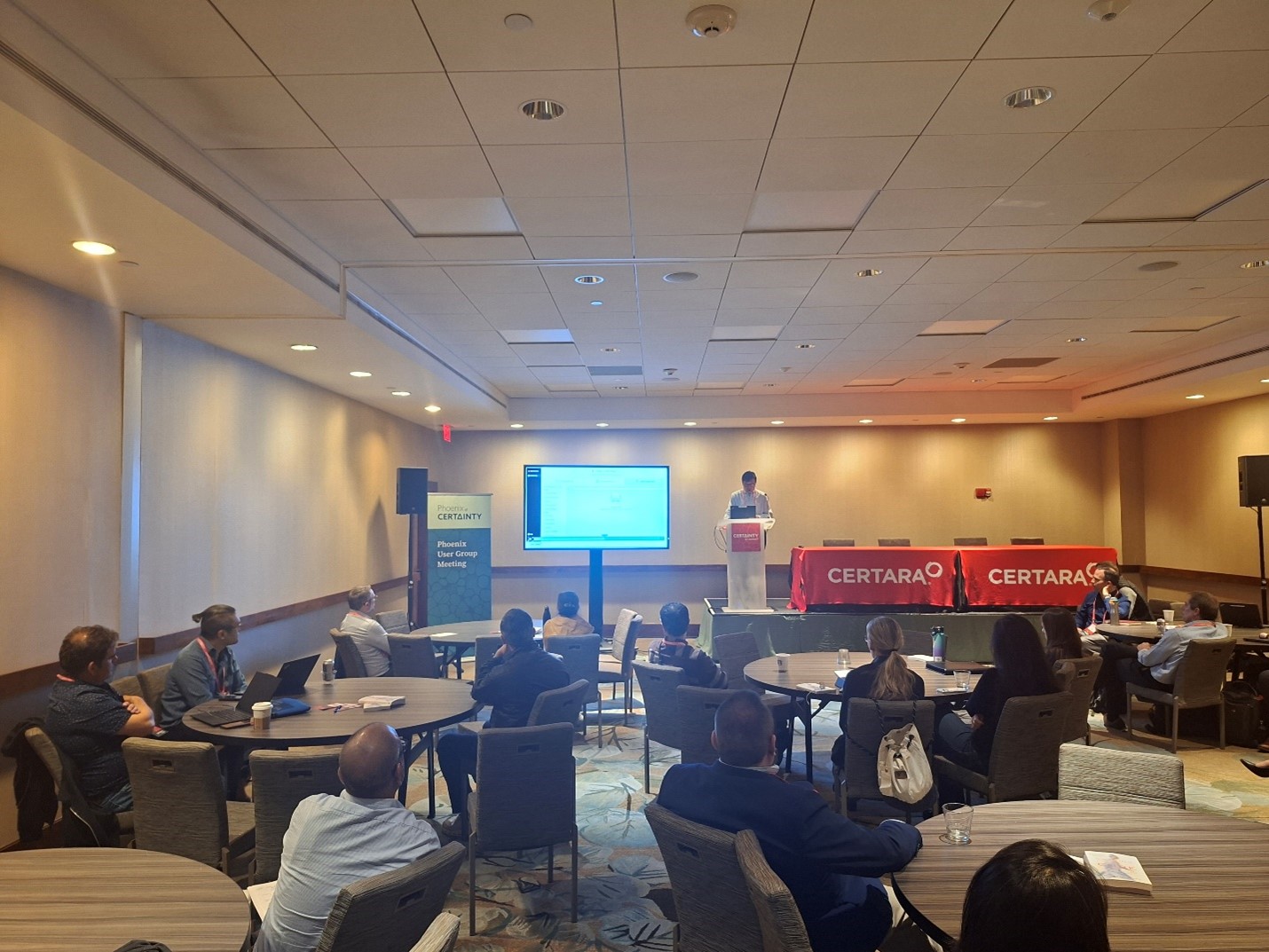
In a highly engaging and energetic presentation, Dr. Offman explored time invariant PK scaling methods such as the Dedrick and Wajima approaches, which translate animal data into the full PK time course for humans rather than focusing solely on scaling clearance and volume. With a reliable prediction of the entire human PK curve, quantitative pharmacologists can estimate the practical quantities development teams care about: expected exposure over time, peak/trough behavior, and dosing implications for first-in-human dose selection, regimen design, and sampling strategy.

Through three case studies, Dr. Offman shared his approach with the audience, offering practical tips and guidance on how to accelerate time to insight using the Phoenix NLME modeling solution.

Open exchange across the pharmacometrics community

One of the most valuable aspects of the Phoenix UGM was the opportunity for customers to connect and learn directly from one another. The event brought together a mix of large, strategic customers as well as smaller organizations, creating an intimate setting where attendees felt comfortable sharing how they work and the challenges they face.

A particularly memorable discussion centered around validation, not always the most exciting topic on the surface, but one that sparked genuine engagement across the room. During the conversation, participants shared the complexity of their internal processes and the significant effort often required to meet IT and validation requirements.

What stood out was the openness of the discussion and the willingness to exchange perspectives. Hearing how peers approach similar challenges helped attendees reflect on their own processes and identify opportunities to work more efficiently. This kind of exchange, candid, practical, and grounded in real experience, is exactly what makes the UGM such a powerful forum for the community.

As the day concluded, one message stood out: innovation in pharmacometrics is no longer just about better tools. It is about enabling scientists to focus on what matters most, turning data into decisions that improve patient outcomes.

Author

Sebastian Kuechenmeister

Associate Director

Sebastian Küchenmeister joined Certara in 2022. He is a creative marketing professional with extensive expertise in multiple marketing disciplines, campaign management, media planning and a passion for content creation and go-to market strategies. Mr. Küchenmeister earned a Bachelor of Arts degree in Political Science from the Humboldt University in Berlin, Germany.

Take the next step on your journey to enhance your PK/PD workflows

Explore other Phoenix solutions to enhance your PK/PD workflow and discover how Phoenix helps you streamline, standardize, and scale your PK/PD analyses. From noncompartmental and compartmental analysis to advanced modeling and reporting, Phoenix supports confident decision making across the drug development lifecycle.

Get in contact with us to schedule your personal demo of TFL Studio and AI PK Reports and see how Phoenix can support your specific workflow needs.

Join our webinarsContact us

Schedule a demo of Phoenix Cloud