



October 31, 2024
For bispecific TCEs, their activity depends on optimizing simultaneous binding to the T cell and tumor-associated targets. Certara has previously developed IO-focused QSP models to support preclinical translation of CD19 TCEs (Flowers et al., 2023). Importantly, this particular model can appropriately capture the distinct dosing impact of increased expression of a target per cell vs changes in the overall number of cells. Given the difference in expression of targets in cancer vs autoimmune disease areas, accounting for target density and cell numbers accurately will be critical in assessing the new doses for repurposed TCEs.
In addition, repurposed IO QSP models can assist autoimmune programs at early stages with various critical decisions, such as target selection and feasibility of targeting one versus multiple molecules, or lead selection by determining optimal affinity ranges and other sensitive drug parameters for a desired bispecific drug format.
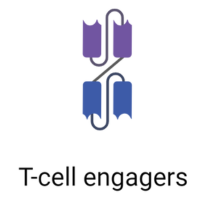
Image created with BioRender.com
Dose prediction for CAR-T cells is more complicated since efficacy depends on the expansion of CAR-T cells, which in turn depends on a complex interplay of antigen availability, target binding affinity, disease burden and dose administered (Rotte et al. 2022). The receptor binding models described above can be expanded to include cell kinetics and dose-dependent efficacy to make them applicable to ‘living’ drugs such as CAR-T cells (Singh et al., 2021).
While clinical PK/PD data from prior indications may be available, dosing confidence for CAR-T cells can be improved by using models to incorporate additional preclinical PK/PD data from relevant disease models to make robust dose predictions.
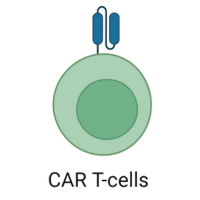
Image created with BioRender.com
Learn more about QSP Services
Leverage Certara’s QSP team to answer questions about target prioritization, dose determination, assessing efficacy or toxicity, evaluating against competitors in the market, and more.


Associate Principal Scientist
Saheli received her PhD in Biomedical Engineering from Case Western Reserve University and conducted postdoctoral research at Georgia Institute of Technology. Before joining Applied BioMath (now Certara), she spent time in academia where her research focused on quantitative single-cell analysis of anti-tumor immunotherapies, including engineered NK cells, ADCC activators and checkpoint inhibitors, in microfluidic platforms. She is also experienced in developing microscale models of immunogenic tumor microenvironments. In collaboration with experts in machine learning, she helped develop a Convolution Neural Network-based model of effector-target interactions at single-cell level.

Director, QSP
Marc earned his PhD in the Systems Biology Department at Harvard University in 2018, working at the interface of computational and experimental cell biology in Marc Kirschner’s lab. His thesis work built a more comprehensive understanding of how complex biochemical processes coordinate the essential events at the beginning of embryogenesis. Prior to his graduate work, Marc received a BS from The College of William & Mary.
Marc is committed to using fundamental principles of biology and mathematics to guide improved therapeutic design.
References
Betts et al. Mechanistic Quantitative Pharmacology Strategies for the Early Clinical Development of Bispecific Antibodies in Oncology. Clin Pharmacol Ther. 2020 Sep; 108(3): 528–541. PMID: 32579234
Chelliah et al. Quantitative Systems Pharmacology Approaches for Immuno‐Oncology: Adding Virtual Patients to the Development Paradigm. Clin Pharmacol Ther. 2021 Mar; 109(3): 605–618. PMID: 32686076
Elkoshi. Cancer and Autoimmune Diseases: A Tale of Two Immunological Opposites? Front Immunol. 2022 Jan 25:13:821598. PMID: 35145524
Flowers et al. A next generation mathematical model for the in vitro to clinical translation of T-cell engagers. J Pharmacokinet Pharmacodyn. 2023 Jun;50(3):215-227. PMID: 36790614
Granit et al. Safety and clinical activity of autologous RNA chimeric antigen receptor T-cell therapy in myasthenia gravis (MG-001): a prospective, multicentre, open-label, non-randomised phase 1b/2a study. Lancet Neurol. 2023 Jul;22(7):578-590. PMID: 37353278
Mackensen et al. Anti-CD19 CAR T cell therapy for refractory systemic lupus erythematosus. Nat Med. 2022 Oct;28(10):2124-2132. PMID: 36109639
Pawar et al. Unlocking therapeutic potential: integration of drug repurposing and immunotherapy for various disease targeting. Am J Transl Res. 2023; 15(8): 4984–5006. PMID: 37692967
Rotte et al. Dose–response correlation for CAR-T cells: a systematic review of clinical studies. J Immunother Cancer. 2022; 10(12): e005678. PMID: 36549782
Singh et al. Bench-to-bedside translation of chimeric antigen receptor (CAR) T cells using a multiscale systems pharmacokinetic-pharmacodynamic model: A case study with anti-BCMA CAR-T CPT Pharmacometrics Syst Pharmacol. 2021 Apr;10(4):362-376. PMID: 33565700
Sans-Pola et al. Off-label use of rituximab in patients with systemic lupus erythematosus with extrarenal disease activity: a retrospective study and literature review. Front Med (Lausanne). 2023; 10: 1159794. PMID: 35145524