



Certara’s CODEX is a curated clinical trial database covering marketed and pipeline drugs across 8 therapeutic areas and 70+ indications. Structured and unstructured data can be explored in the no-code analytics platform, downloaded, and integrated with your internal datasets to support modeling and simulation, enabling more confident development and market access decisions.

CODEX Clinical Outcomes Databases
Curated clinical trial database for earlier, confident decisions
Learn more about CODEX
Trial population
Analyze curated clinical trial data to characterize and identify target populations for new studies
Study design and optimization
Benchmark endpoints and effect sizes to refine sample size calculations, reducing costs and increase success rates
Efficacy and Safety comparison
Review integrated summaries of safety and efficacy (ISS/ISE) for similar products, drawn from CODEX’s clinical outcomes database, to inform regulatory approval strategies
Commercial viability
Run economic models on curated outcomes to generate additional data points that demonstrate value to payers and support competitive pricing assessments
Learn more about these popular indication databases
Do more with your clinical outcomes database
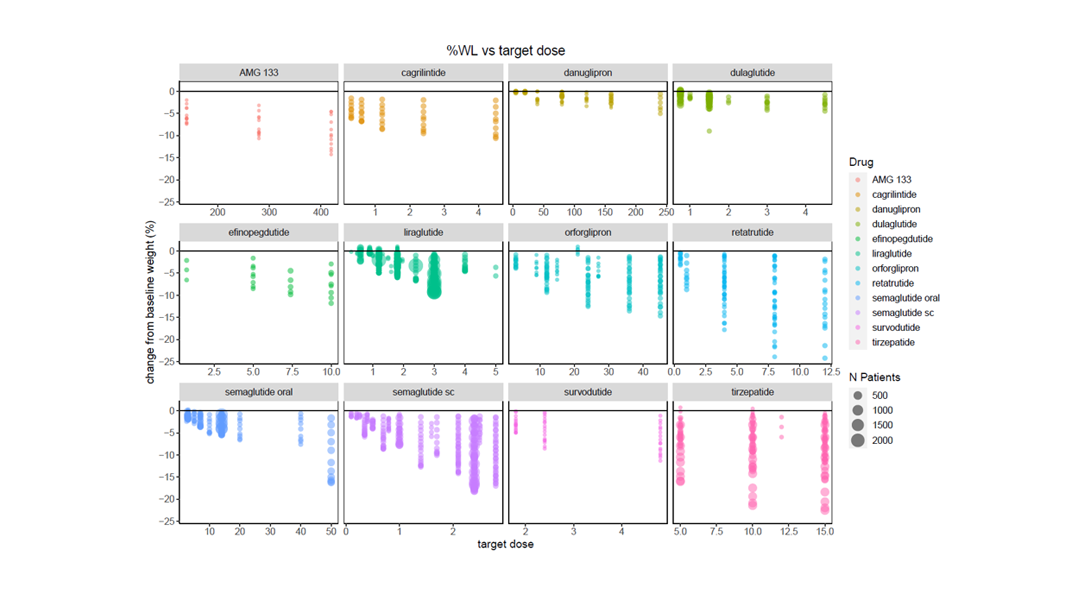
Compare treatments head-to-head
Certara’s CODEX platform allows users to perform a simple network meta-analysis to compare key safety and efficacy endpoints for multiple treatments.
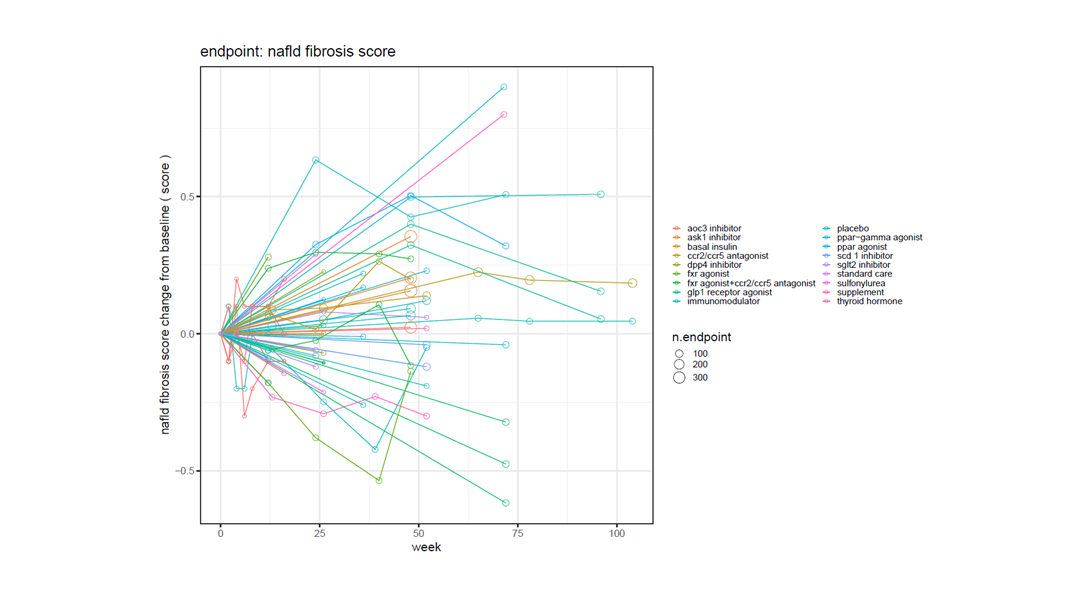
Interactive visualizations and tailored analytics
CODEX’s intuitive graphical interface allows users to set filters such as patient population, endpoint, indication and studies to explore and visualize the most relevant trial data.
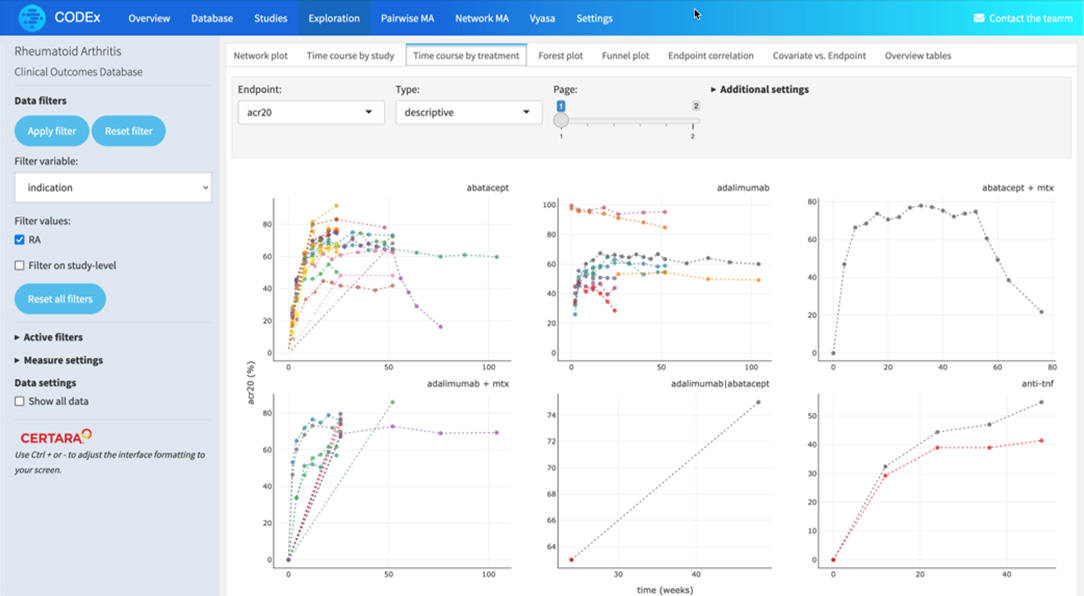
AI-powered connectivity
Backed by Certara.AI, CODEX features flexible data connectivity enabling you to connect internal databases and document repositories to expand your access to relevant content.
Certara.AI and CODEX
Certara leads the industry in advancing AI-powered solutions for clinical trial optimization. Seamlessly integrate your internal data for meta-analysis tasks and utilize our AI-powered document extraction tool to effortlessly craft custom datasets tailored to your unique requirements.
Related resources
View all
With CODEX, your data is secure
Certara holds ISO 27001 certification for Certara’s Information Security Management System (ISMS). We have implemented robust security controls, undergone rigorous risk assessments, and continuously strive for improvement. CODEX ensures full compliance with global data protection standards, offering peace of mind for sensitive analysis.
Learn more in our Trust Center
Schedule a demo
Discover how Certara’s Curated Clinical Outcomes Database can transform your clinical trial strategies. Schedule a demo today.

Gain access to 70+ therapeutic indication datasets.
Optimize trial design and anticipate outcomes with confidence.
Leverage AI-powered tools for custom dataset creation.
FAQs
What therapeutic areas and indications are covered?
CODEX spans 8 therapeutic areas and more than 70 indication-specific curated databases: oncology, immunology, cardiovascular, metabolic, CNS, pain, respiratory and ophthalmology, along with infectious disease and selected additional indications.
Where does the data come from and how is it curated?
CODEX is built from publicly available clinical trial data for marketed and pipeline drugs, drawn from peer-reviewed publications, conference presentations, regulatory reviews and trial registries.
Certara’s in-house scientists have curated this clinical trial data for more than 20 years using a combination of automated and manual methods, so records are both efficient to produce and quality-checked by people who understand the therapeutic context. Every record links back to its source, which your team can open, download and read.
Which endpoints are captured?
CODEX focuses on clinically meaningful safety and efficacy endpoints, captured quantitatively as curated clinical trial data so they are ready for meta-analysis and prediction rather than requiring re-extraction.
Alongside endpoint results, the databases hold study design, population characteristics, dosage and treatment arm detail, which is what makes filtering and like-for-like comparison possible.
Can CODEX compare treatments that have never been studied head-to-head?
Yes. This is one of the main reasons teams license CODEX. Built-in pairwise and network meta-analysis lets you compare key safety and efficacy endpoints across multiple treatments using the published evidence base within CODEX’s curated clinical trail database, producing indirect treatment comparisons where no direct trial exists.
Outputs include forest plots, endpoint correlations, endpoint graphs by treatment and time-course data for each trial, all of which can support differentiation strategy, HTA submissions and payer discussions.
Do I need programming skills to use CODEX?
No. CODEX includes a no-code analytics platform with an intuitive graphical interface. Users filter by population, endpoint, dosage, study type and indication to explore and visualize the trial data most relevant to their question, then generate reports directly.
Available reports include database summaries, breakdowns by drug, drug class, endpoint, endpoint category and publication year, and analysis outputs including meta-analysis and forest plots.
How does CODEX integrate internal and external data?
CODEX is designed to compliment your own evidence. Data downloaded from this clinical outcomes database integrates with internal repositories for combined analysis, and through Certara.AI, CODEX can connect directly to your internal databases and document repositories so external precedent and internal results are analyzed together.
What role does AI play in CODEX?
AI accelerates curation and extends coverage across the curated clinical trial database; scientists remain accountable for quality. Certara.AI document extraction builds custom datasets tailored to your program, covering additional endpoints, additional drugs or entirely new indications, and powers the connectivity between CODEX and your internal sources. Curated outputs continue to be reviewed by Certara scientists before they reach the databases.
Who typically uses CODEX?
Clinical pharmacology, pharmacometrics and MBMA, clinical development and biostatistics, HEOR and market access, and medical affairs and competitive intelligence teams. Biopharma companies, trial sponsors, CROs, HEOR consultancies and academic research groups all license CODEX.
Where a question needs advanced evidence synthesis, Certara MBMA and HEOR consultants can take on the analysis alongside your team.
