





search

June 16, 2026

This blog post is based on my presentation at the 1st European Controlled Substance Compliance & Shipping Conference organized by Pistoia Alliance at the Novartis Campus in Basel on 2-3 October 2025.

In February 2026, the European Union Drugs Agency (EUDA) published nine landmark assessment reports examining precursor chemicals linked to the production of synthetic cathinones and amphetamine. Those findings moved swiftly into policy: by April 2026, the European Commission had introduced EU-wide controls on all nine substances set to apply from September 2026. This regulatory milestone serves as the backdrop of this blog: what precursor chemicals actually are and how their role in the illicit drug market evolved.

What are drug precursors?

Of the approximately substances under , there is only a handful of natural products, for instance cannabis, cathinone, cocaine, ephedrine, mescaline, and morphine; the rest is made by chemical synthesis either from a natural product or from small synthetic building blocks.

Drug precursors, in general, are chemicals that after a few synthetic steps become incorporated into the structure of pharmaceuticals, plastics, cosmetics, fragrances, dyes, or other industrial chemicals. Many precursor chemicals are dual-use chemicals: they could also be building blocks for the illicit manufacture of internationally controlled narcotic drugs or psychotropic substances. The 1988 UN Convention against Illicit Traffic in Narcotic Drugs and Psychotropic Substances lists two groups of precursor chemicals: Table I contains key chemicals used to produce illicit drugs. For example, acetic anhydride (for heroin), ephedrine (for methamphetamine), ergotamine (for LSD), safrole (for MDMA), and N-phenethyl-4-piperidone (for fentanyl). Common industrial chemicals, such as acetone, anthranilic acid, hydrochloric acid, piperidine and toluene are listed in Table II of the Convention.

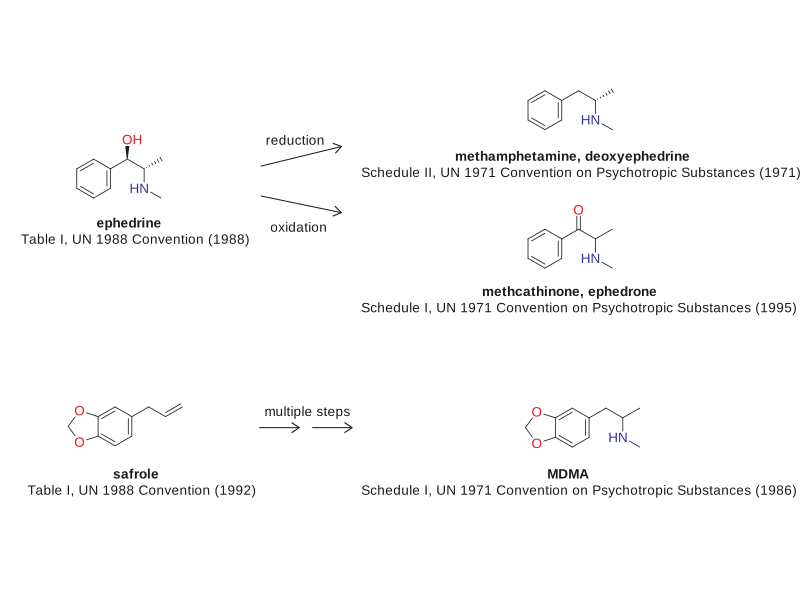
Two natural products, ephedrine and safrole have been used in the manufacture of illicit drugs (Scheme 1). Dates in parentheses indicate the year the substance was scheduled in the relevant UN Convention.

The palette of illicit drugs and their precursors has been changing continuously. Data mining of old and current medicinal chemistry literature reveals new, structurally diverse substance families. ‘New’ psychoactive substances (NPS) are not invented: they are discovered from medicinal chemistry literature, including patents, old and new. Initially a discarded – and unscheduled – drug with proven activity is marketed followed by a series of novel analogues sharing a common structural core and possibly similar pharmacological properties.

Advances in organic synthesis also contribute to the increased structural diversity: on the one hand, the manufacture of substances with simple structure can be cheaper, while, on the other, complex molecules can be assembled with greater ease. In many cases, the precursors of NPS have a long history of use in the manufacture of medicines and are thus readily available. The internet, by becoming the ‘cookbook’ of the drug trade also plays a crucial role in finding and exchanging information on the chemistry and pharmacology as well as trade of NPS.

Ne pas se laisser faire

Drug suppliers adapt to changes in regulations by replacing controlled substances with unscheduled chemicals. Innovative ways are needed to address the new challenges. Regulating drug precursors in response to new drugs or new methods of illicit production is one of the novel, proactive responses.

To reduce the availability of drug precursors for illicit drug production, the European Commission in 2025 proposed a regulation on their monitoring and control. EUDA is expected to create an information repository that would cover all relevant scheduled and non-scheduled substances .

Dual use precursor chemicals are typically not on the radar of law enforcement agencies, including customs, thus can be shipped legitimately for conversion to a controlled drug or uncontrolled NPS at or close to the actual market. There is thus a dilemma: to secure the supply chain of the manufacture of legitimate chemicals and, at the same time, to prevent diversion to illicit production.

Here, I am providing examples of small organic building blocks that are being used in the manufacture of currently used medicines and also emerged recently as precursors of NPS. Examples of such dual-use NPS precursors were selected by reviewing the EUDA’s database on New Drugs (EDND), identifying distinctive cores, then running a related sub-structure search in ChEMBL database. Finally, the precursor chemicals discussed in this blog are scanned to find their controlled substances status using the Compliance Checker system.

Precursors of cathinones

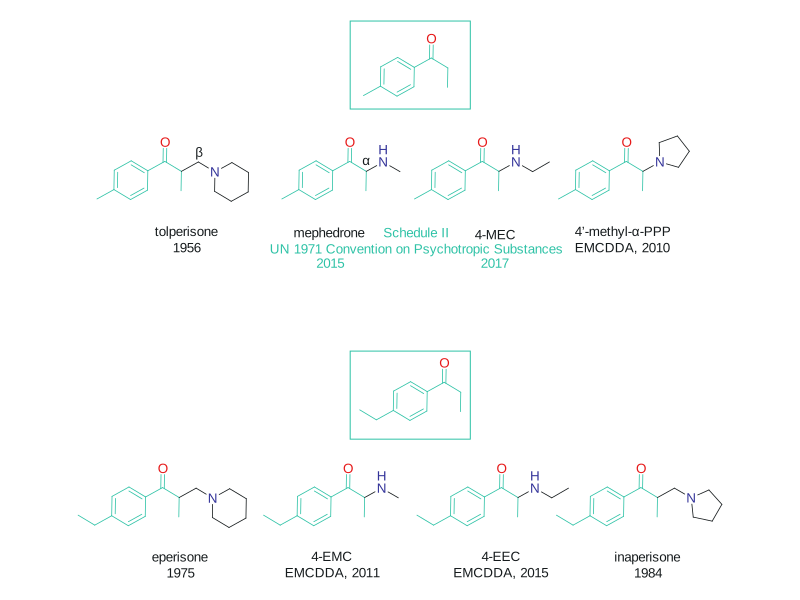
Cathinones are substances structurally related to cathinone (2-aminopropiophenone), the principal alkaloid of khat (Catha edulis), the leaves of which are widely used in East Africa as psychostimulant (‘natural amphetamine’). It was controlled according to the 1971 Convention on Psychotropic Substances in 1986. Since 2005, over 180 synthetic cathinones have been notified by EUDA as NPS. Some simple cathinone NPS sharing common precursors with three spasmolytic medicines are depicted below (their INN and initial publication is shown). These β-aminoketone medicines are produced by Mannich type aminomethylation, while the three psychostimulant α-aminoketone cathinone NPS are obtained by α-bromination of the appropriate propiophenone precursor followed by amination (their commonly used name or acronym, the date of their first notification by the EU’s drug agency, and regulator status, if any, are shown).

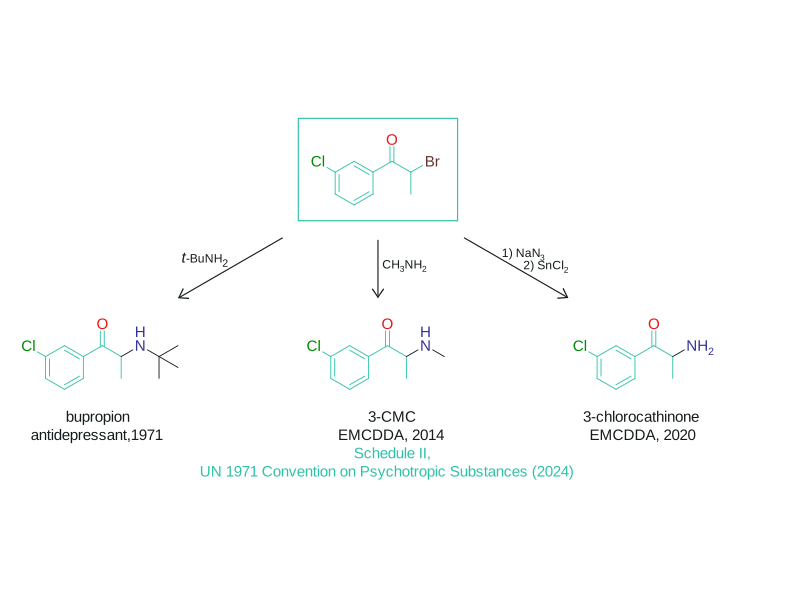
The production of bupropion, a widely used antidepressant medicine, and two cathinone NPS relies on the same propiophenone precursor, 2-bromo-(3-chlorophenyl)propan-1-one.

On 28 April 2026, the European Commission introduced EU-wide controls on nine high-risk precursor chemicals used in illicit drug production Among these are eight propiophenones and include (3-methylphenyl)propan-1-one, (4-methylphenyl)propan-1-one, (3-chlorophenyl)propan-1-one, (4-chlorophenyl)propan-1-one and their α-bromo-derivatives.

Cannabinoid precursors

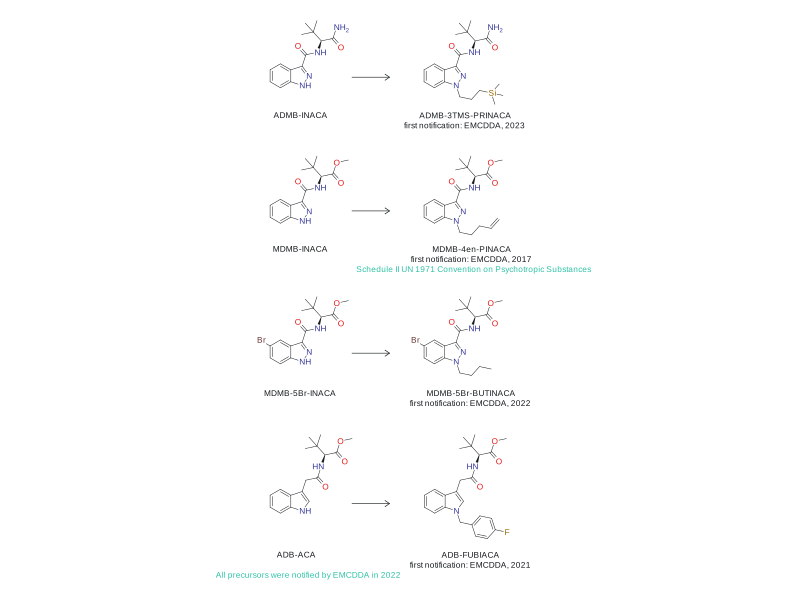
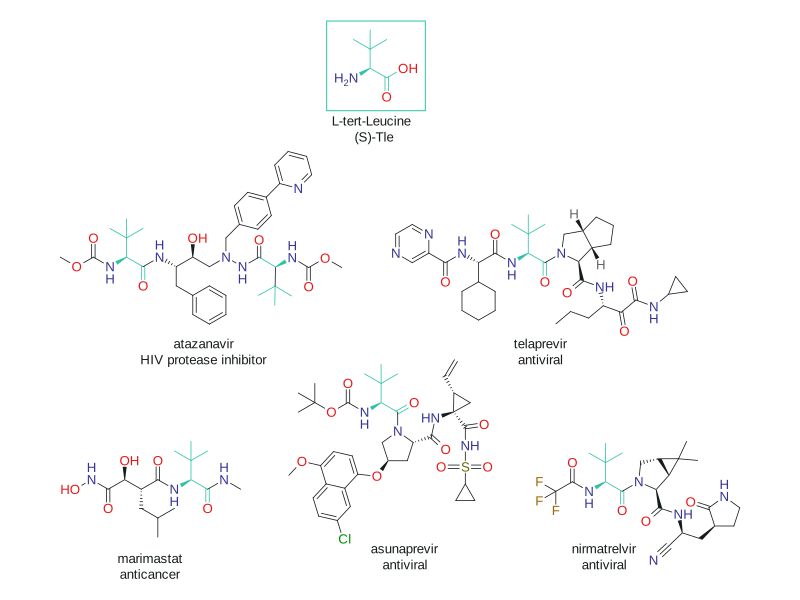
A notable though not entirely unexpected emergence of a group of synthetic cannabinoid receptor agonist NPS are indole- and featuring a (S)-tert-Leu motif. Selected examples, some of which are described in a Pfizer patent, are shown below. This chiral amino acid homologue has been incorporated into several cannabinoid precursors contained in “Do-It-Yourself” kits (shown on the left below). The emergence of such uncontrolled precursors offered on the internet, typically by Chinese manufacturers, in early 2022 can be attributed to the generic ban of a structurally broad range of synthetic cannabinoids in China in May 2021. The cannabimimetic ind(az)oles whether scheduled or not in the importing country can conveniently be obtained from these precursors by N-alkylation.

(S)-tert-Leu is a key structural element of several antiviral and anticancer medicines as shown in the examples below. It is available in quantities explaining its widespread use as a building block for cannabinoid NPS.

Opioid precursors – When a prophecy comes true

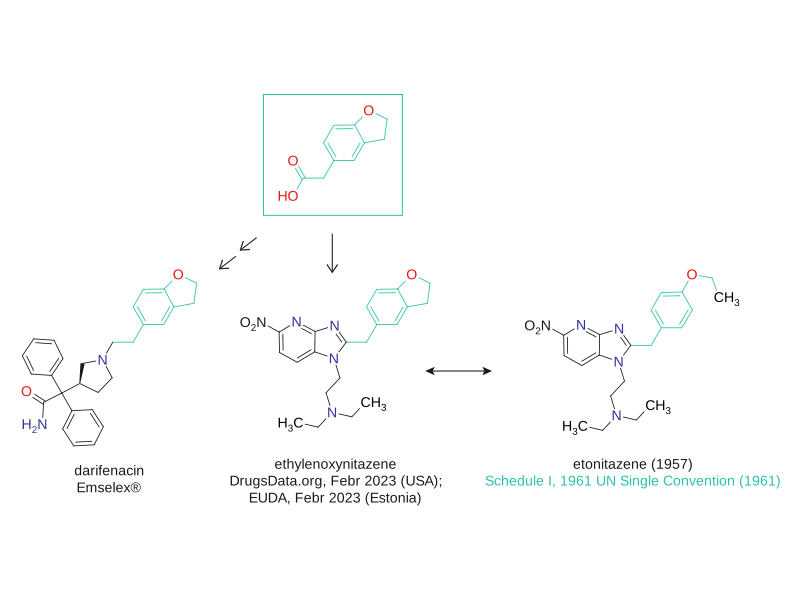
In a collaboration started in 2021 with colleagues in the US and Belgium we have prepared and assayed in vitro a series of hitherto unknown nitazenes anticipated to appear on the illicit drug market as opioid NPS. The precursor of a new analogue of etonitazene, the prototypical 2-benzylbenzimidazole opioid, was 2,3-dihydrobenzofuran-5-yl-acetic acid, which is a reported starting material in the production of darifenacin, a muscarinic ACh receptor blocker for the treatment of urinary incontinence.

By March 2022, we had in-house data from receptor studies indicating that the new analogue was more potent than morphine though less potent than fentanyl or etonitazene at the mu-opioid receptor with an EC50 of 62 nM; the respective EC50 values of morphine, fentanyl, and etonitazene were 267 nM, 14.6 nM, and 0.75 nM.

In Febr 2023, DrugsData, a US drug checking lab reported an unidentified substance that appeared to be an unknown opioid. Using a standard already available from our study, the structure was established as the dihydrobenzofuran analogue of etonitazene. The substance was then also detected in Latvia, Estonia, and Canada. The results of our studies with this and other prophetic nitazenes became available online only on 7 November 2024 suggesting that suppliers of opioid NPS are well versed in drug design.

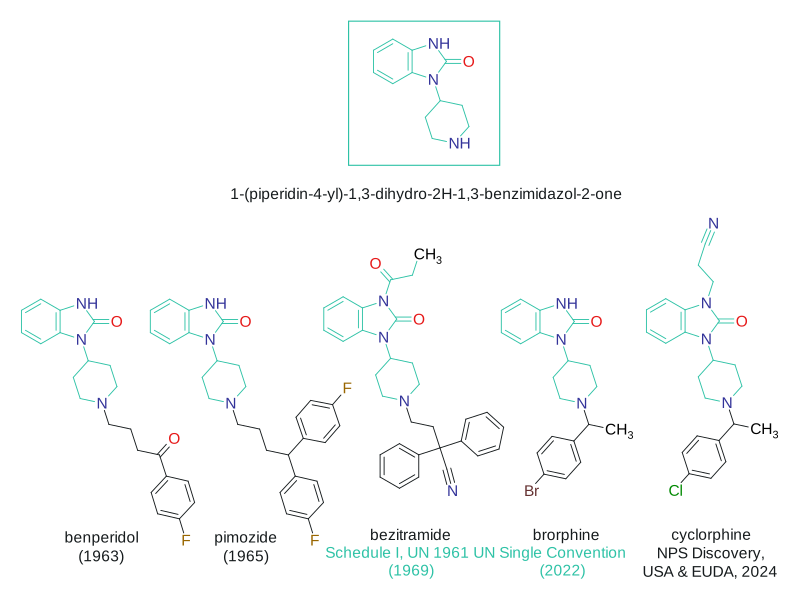
Brorphine and cyclorphine are two of the recently emerged group of synthetic opioid NPS, the orphines. They feature a piperidinylbenzimidazolone moiety for which a substructure search in ChEMBL retrieved two antipsychotic medicines, benperidol and pimozide. This distinct heterocyclic core is also present in the internationally controlled narcotic analgetic bezitramide. Their commercially available common precursor chemical is N-(piperidin-4-yl)benzimidazolone, which is converted by alkylation to the final drug.

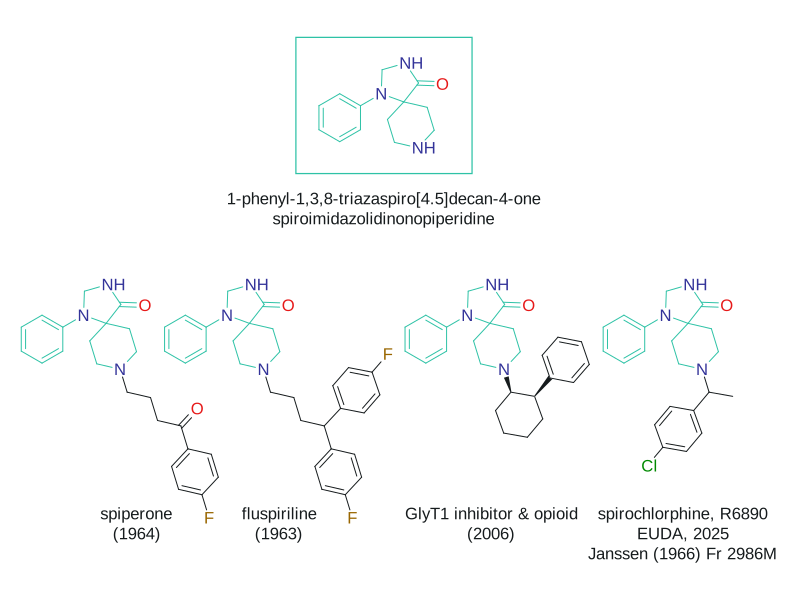
Spiropiperidines are privileged scaffolds. Of these, N-phenyl-substituted spiroimidazolidinone piperidine, commonly called spirodecanone, is a dual-use precursor chemical. A substructure search in ChEMBL retrieved the antipsychotic medicines spiperone and fluspiriline, and additional four substances (mespiperone, spiramide, spirilene, and spiroxatrin) that have undergone Phase 2 clinical trials.

An experimental phenylcyclohexyl derivative featuring this core inhibits the glycine transporter protein and also possesses opioid activity.

It is of note that the experimental drugs fluspiperone and icospiramide containing a 4-fluorosubstituent in the phenyl moiety of spirodecanone were also hits. Such fluorinated spirochlorphine analogues may appear on the illicit drug market as opioid NPS. Spirobrorphine, the 4-bromo analogue of spirochlorphine was identified by forensic laboratories in 2025.

The related 5-chloro derivative of piperidinylbenzimidazolone (R 29676) is a precursor of domperidone. An NPS opioid, namely 5-chloro desmethylchlorphine derived from it has been reported to UNODC Early Warning Advisory on New Psychoactive Substances. R 29676 was temporarily scheduled as a drug precursor in Canada in April 2026.

Precursors under control

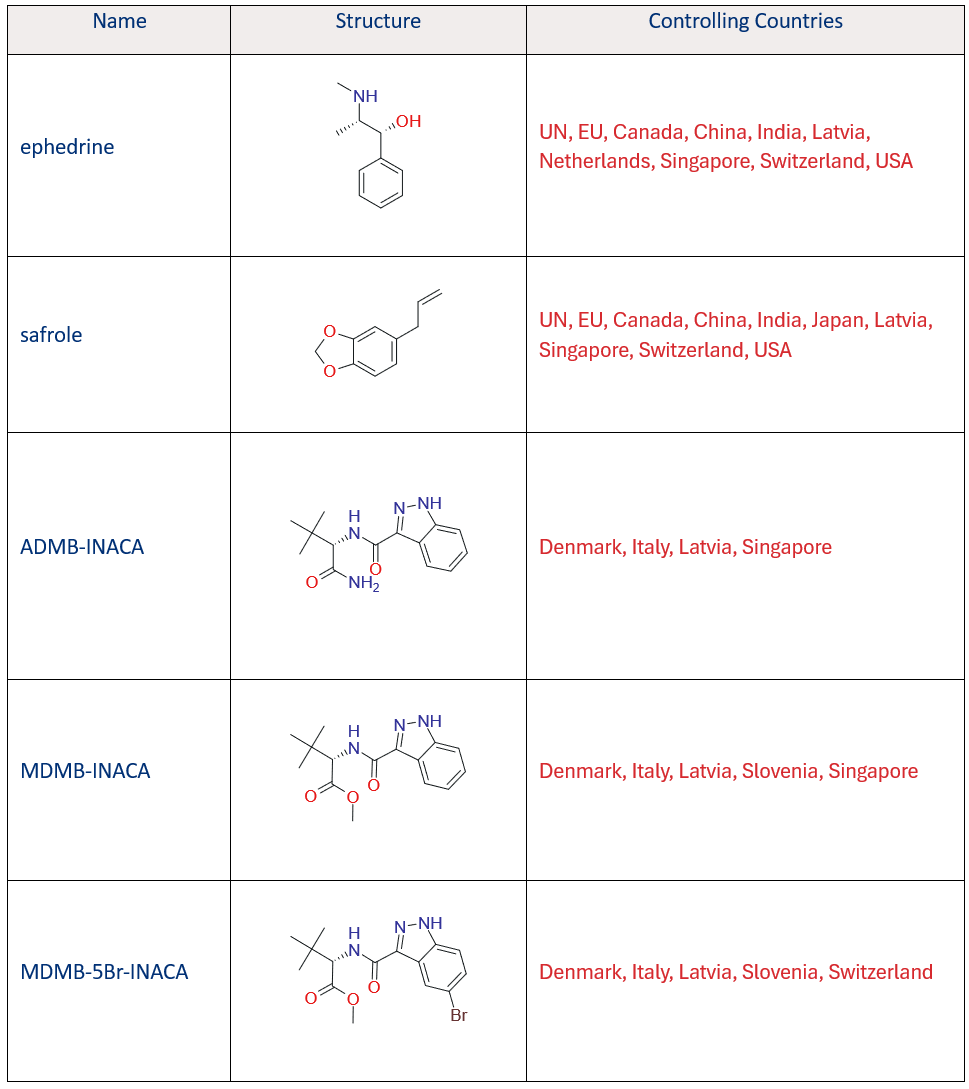
We scanned the 13 precursors used as examples in this blog in the Compliance Checker system to find their controlled substances status. Ephedrine and safrole are controlled internationally, but only 3 additional precursor chemicals are under control in a few countries; the remaining 8 compounds are currently not considered controlled substances.

The examples in this blog are intended to demonstrate that precursor chemicals utilized by the pharmaceutical industry may have dual uses, and producers of NPS ‘capitalize’ (pun intended) on their availability in bulk quantities. The private sector, academic researchers, forensic scientists, customs agents as well as regulators must be aware of the shady side of medicinal chemistry. Vigilance and appropriate regulation of such chemicals may prevent the diversion of such precursors.

Ujváry István, PhD

Manager, iKem BT