




search

February 18, 2026

ICH M15 formalizes global expectations for Model-Informed Drug Development. These FAQs highlight what matters most, clarifying requirements and helping teams build structured, credible, regulator-ready MIDD strategies. For additional perspective on how the guideline reshapes broader regulatory thinking, explore our insights on redefining regulatory strategy with ICH M15.

1. What is ICH M15, and why is it significant for drug developers?

ICH M15 is the first harmonized guideline focused specifically on Model-Informed Drug Development (MIDD). It outlines how model-based evaluations in drug development should be planned, evaluated, communicated, and justified for regulatory decision-making. Its release signals a major global shift toward consistent expectations across agencies, making clear that modeling is now a core component of evidence generation.

2. How does ICH M15 change the way teams approach MIDD?

M15 formalizes expectations around model credibility, terminology, and communication. Teams are now expected to articulate the context of use, evaluate uncertainty systematically, and demonstrate that modeling approaches are appropriate for the decisions they inform. This guidance elevates MIDD from a technical activity to a structured, decision-support framework.

3. Why is model credibility central to ICH M15?

Credibility determines whether a model is fit for its intended regulatory or scientific use. M15 emphasizes that credibility must be evidence-based and risk-informed—not just a validation checklist. Regulators want transparency around assumptions, data quality, and uncertainty to ensure decisions are supported by sound, well-characterized analyses.

4. Why does consistent terminology matter under ICH M15?

Terms like context of use, key assessment elements, model impact, and totality of evidence have specific meanings under the guideline. Using them correctly improves alignment across internal teams and ensures that regulatory reviewers interpret modeling strategies as intended. Clear, shared language prevents miscommunication and strengthens credibility.

5. Why does MIDD require multidisciplinary alignment?

Modeling affects clinical, regulatory, manufacturing, and safety decisions. ICH M15 reinforces that credibility cannot be assessed by modelers alone; it requires cross-functional agreement on decision needs, assumptions, and evidence standards. When teams evaluate models together, the resulting strategy is more defensible and coherent.

6. How does early regulatory engagement enhance MIDD success?

ICH M15 encourages sponsors to discuss modeling plans with regulators before analyses are performed. Early dialogue helps align expectations, clarify assumptions, and reduce the risk of rework. Agencies increasingly view MIDD as a collaborative process when sponsors proactively communicate reasoning, not just results.

7. Why does global harmonization under ICH M15 matter?

For global programs, inconsistent expectations historically created duplication and uncertainty. M15 reduces regional variability by establishing a unified framework for credibility and communication. This means modeling plans can be designed once and defended consistently across FDA, EMA, PMDA, and other agencies.

8. What types of decisions can MIDD influence under the ICH M15 framework?

MIDD already plays a critical role in regulatory decisions, from dose selection and exposure– response evaluation to pediatric extrapolation, PBPK-based DDI waivers, virtual bioequivalence, and reducing the need for certain clinical studies. ICH M15 strengthens the framework for applying MIDD and extends its impact beyond regulatory review, explicitly supporting its use to inform key decisions earlier in drug development, even when no direct regulatory assessment is involved.

9. Why should organizations assess their readiness now?

ICH M15 represents more than a guidance document—it reflects a broader expectation from regulators that MIDD will be used systematically and transparently. Teams that understand credibility principles, terminology, and cross-functional practices will be better positioned to justify decisions and avoid downstream delays.

10. How can this guide help teams prepare for ICH M15?

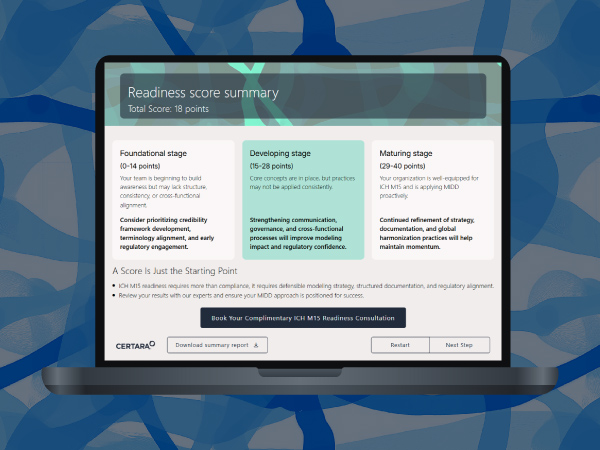
This guide provides the foundational concepts, frameworks, and alignment practices needed to evaluate current capabilities and identify areas where additional focus or support may be required. It helps teams understand not only what ICH M15 expects—but why those expectations matter for modern regulatory strategy.

Author

Erika Brooks

Marketing Director, Quantitative Science Services

With over 22 years of experience in hospitals, health systems, associations, life sciences, physician practices, and suppliers, Erika is an experienced marketing strategist and supports the Quantitative Science Services offering with Go-to market planning and execution.

Contact us